

If you’re researching Sylfirm X before booking — or trying to figure out when to schedule around a big event — this is the guide you need. We cover the full recovery timeline, what the grid pattern is and how long it lasts, how your skin will look on camera at every stage, and how to plan your sessions for the best possible outcome. Catara Med Spa serves clients in Algonquin, Crystal Lake, Lake in the Hills, Huntley, and the greater Northwest Chicago suburbs.
TL;DR
- Sylfirm X combines RF energy and microneedling with dual-wave technology to build collagen, tighten skin, and target pigment and redness simultaneously
- Surface downtime is typically 24 to 72 hours; most patients are comfortable in social settings within 2 to 5 days
- The grid-like dot pattern is a normal part of healing — it peaks on day 1 and is rarely noticeable beyond day 7
- First visible improvements appear within 1 to 2 weeks; peak collagen remodeling takes 2 to 3 months
- Schedule your last session at least 2 to 4 weeks before any major event for fully healed, glowing skin
- A series of 3 to 4 treatments spaced 4 to 6 weeks apart delivers the most significant and lasting results
What Is Sylfirm X RF Microneedling?
Sylfirm X is an FDA-cleared radiofrequency (RF) microneedling device that combines two proven skin-remodeling technologies in a single treatment. It uses an array of fine microneedles to create controlled micro-injuries in the skin while simultaneously delivering RF energy into the dermis, stimulating collagen and elastin production from the inside out.
What sets Sylfirm X apart from traditional microneedling and older RF devices is its dual-wave technology: a pulsed wave mode that selectively targets abnormal blood vessels and pigment clusters, and a continuous wave mode for deeper tightening and wrinkle reduction. This means a single platform can address a wide range of concerns, including melasma, rosacea, acne scars, fine lines, sagging skin, and enlarged pores.
Why patients at Catara choose it: Compared to older RF devices, Sylfirm X’s selective targeting delivers stronger results with a shorter recovery. Compared to traditional microneedling alone, the added RF energy drives more significant collagen remodeling at a deeper level. It is also considered safe for a broader range of skin tones when settings are appropriately customized by your provider. Learn more about our RF microneedling services at Catara.<p>One way clients shorten the visible recovery window is by layering the <a href=“https://cataraspa.com/elevai-exosomes-treatment-kit/“>Elevai Exosomes Treatment Kit</a> into their post-treatment routine, starting with the in-clinic Empower serum and continuing with daily exosome support at home.</p>
Sylfirm X carries FDA clearance as a radiofrequency microneedling device, which means it has met the agency’s safety and efficacy standards before being used in a clinical setting. The FDA’s medical device framework requires devices like Sylfirm X to demonstrate a reasonable assurance of safety before providers can offer them to patients — one reason choosing a trained, licensed med spa matters as much as the device itself.
How Sylfirm X Works (In Simple Terms)
The microneedles penetrate the skin to a controlled depth, creating micro-channels that trigger the body’s natural wound-healing cascade. Simultaneously, RF energy heats the surrounding tissue, causing immediate collagen contraction and sustained neocollagenesis — new collagen production — over the following weeks and months. For a deeper look at the technology behind our treatments, visit our technology page.
Two modes, two distinct jobs:
- Pulsed wave mode: Targets abnormal vasculature and melanin clusters. Ideal for melasma, rosacea, post-inflammatory redness, and broken capillaries.
- Continuous wave mode: Delivers sustained thermal energy for dermal remodeling, skin tightening, and wrinkle reduction.
Why this matters for downtime: Because Sylfirm X selectively injures only the intended targets rather than broad surface tissue, recovery is typically shorter and gentler than ablative lasers or older fractional RF platforms — while still delivering meaningful remodeling results.
Downtime and Results — The Big Picture
What is the typical downtime for Sylfirm X?
For mild to moderate treatment settings, expect 24 to 72 hours of redness and mild swelling, with light dryness or flaking between days 3 to 5. More aggressive settings can extend visible redness to 4 to 5 days and swelling up to 5 days, with occasional light bruising at higher energies or in areas with thinner skin.
Social downtime — the point at which most patients feel comfortable going out without explaining what they had done — is typically 2 to 5 days depending on treatment intensity and individual skin response.
How long do Sylfirm X results last?
Results from a properly completed treatment series typically last 12 to 18 months or longer with good skincare and consistent sun protection. Maintenance treatments every 6 to 12 months can sustain and build on those results. Lifestyle factors — particularly UV exposure, smoking, and an incomplete at-home routine — are the primary things that shorten longevity.
What You’ll Look and Feel Like — Day by Day
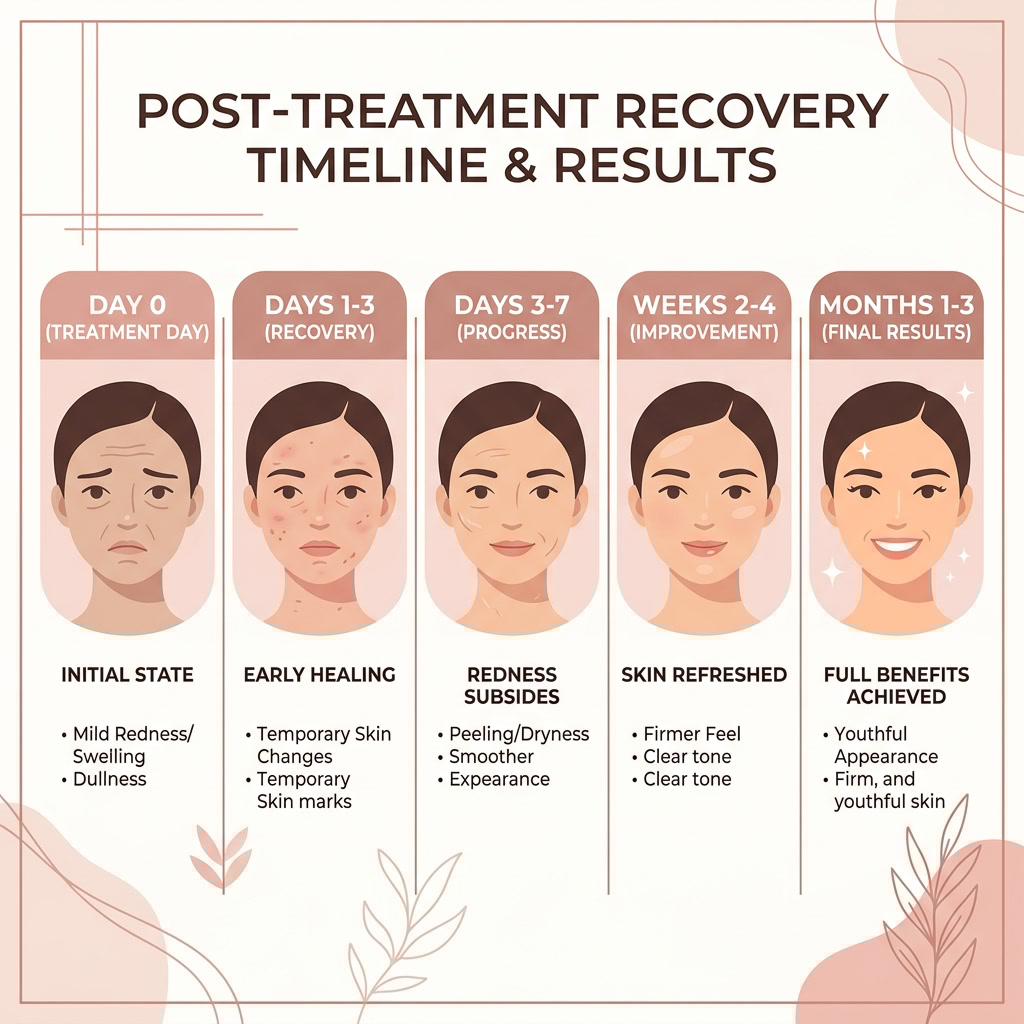
This is the section most people wish they’d had before their first appointment. Here’s an honest, stage-by-stage breakdown.
Day 0: Immediately After Treatment
In-clinic: You’ll leave with moderate sunburn-like redness and warmth across the treated area. Mild to moderate swelling — especially around the eyes and cheeks — is normal. Depending on the settings used, you may notice small pinpoint marks or a faint grid pattern on the skin surface where the needle array made contact. At higher energies, minimal pinpoint bleeding is possible and normal.
How you feel: The numbing cream applied before treatment handles most discomfort in-clinic. Most patients describe the sensation as pressure, warmth, and mild intensity rather than pain. In the hours after the numbing wears off, you’ll notice heat, tightness, and tenderness to the touch — very similar to a sunburn.
Immediate aftercare: No washing, no makeup, no touching the treated area until your provider clears it. Avoid exercise, saunas, and direct sun exposure. Keep skin cool and clean.
One way clients shorten the visible recovery window is by layering the Elevai Exosomes Treatment Kit into their post-treatment routine, starting with the in-clinic Empower serum and continuing with daily exosome support at home.
Days 1 to 3: The “Sunburn and Puffy” Phase
How you look: Redness fades from bright pink to a softer flush over the first 48 to 72 hours. Swelling gradually decreases, though it may peak slightly at day 1, especially around the eye area. The grid pattern and pinpoint marks are still noticeable at close range, particularly in bright or overhead lighting.
How you feel: Warm, tight, and mildly tender — essentially a healing sunburn. Most patients describe it as uncomfortable but very manageable.
What you can usually do:
- Gentle, non-foaming cleansing and a bland moisturizer once cleared by your provider
- Mineral SPF is mandatory any time you go outside
- Makeup is often permitted after 24 to 48 hours once the skin surface is intact — confirm with your Catara provider
Camera reality: In close-up selfies, the redness and grid texture will be visible. In person at conversational distance, most people read as slightly flushed rather than visibly post-procedure.
Days 3 to 7: Dry, Flaky, Texture Phase
How you look: Most redness is resolved by now, replaced by a mild pink glow. The skin begins to look and feel dry, with fine surface flakes or micro-peeling — most noticeable in strong light, overhead lighting, or macro-distance phone cameras.
How you feel: Tight, dry, slightly rough. Mild itching as dead surface cells shed is normal and is a sign of healthy turnover. Resist the urge to pick or scrub.
What to avoid:
- No exfoliating acids (AHAs, BHAs), retinoids, or scrubs until flaking fully resolves
- No high-heat environments: hot yoga, saunas, steam rooms
- Avoid prolonged direct sun without mineral SPF
For anyone who needs to be camera-ready: Days 4 to 7 are workable with the right approach. A hydrating serum followed by an emollient moisturizer before mineral foundation will blur micro-texture significantly. Soft window light or a diffused ring light minimizes any remaining dryness on camera.
Weeks 2 to 4: Quiet Healing and Visible Improvement
How you look: Your skin barrier is fully healed by this point. Makeup sits smoothly, your tone looks more even, pores appear reduced, and texture is more refined. Early improvements in redness, pigment, and fine lines will be visible — though the best results are still building beneath the surface.
How you feel: Normal. Most patients forget they had a procedure and simply enjoy the fact that their skin looks noticeably better. This is the window when before and after photos start looking genuinely compelling. Browse our before and after gallery to see real patient results.
Months 1 to 3: Peak Results
The most significant changes happen beneath the surface during this phase. Collagen fibers are reorganizing, new elastin is being laid down, and the structural improvements gradually become visible on the surface. Expect continued improvement in:
- Skin firmness and jawline definition
- Scar depth and texture
- Pigment evenness, especially melasma treated with pulsed wave mode
- Pore size appearance
- Fine line and wrinkle depth
Why a series matters: A single treatment produces real but limited results. A series of 3 to 4 sessions, spaced 4 to 6 weeks apart, triggers cumulative collagen remodeling that produces significantly more dramatic and durable improvements than any single session can achieve.
The Tiny Dots and Grid Pattern — What They Are and Why You See Them
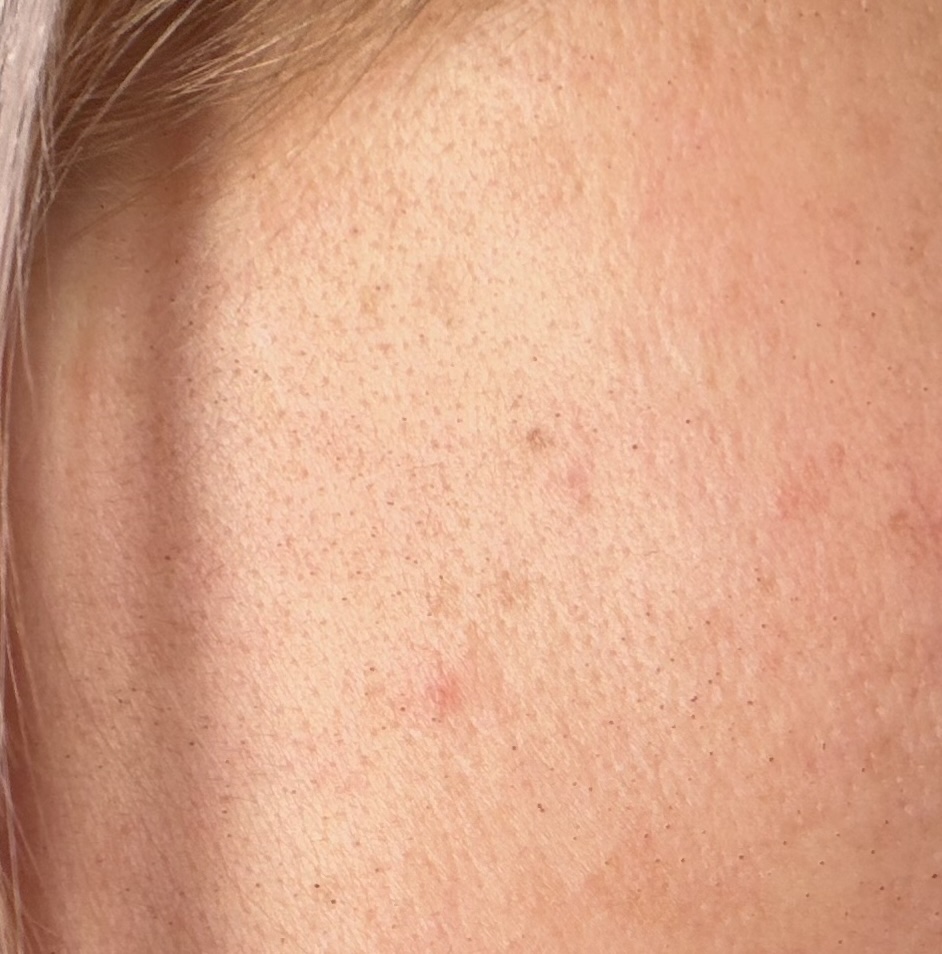
What causes the grid pattern after Sylfirm X?
The Sylfirm X handpiece tip uses a fixed array of fine insulated needles arranged in a precise grid. Each pulse creates a cluster of micro-channels in the skin, and the RF energy delivered through those channels creates columns of controlled thermal coagulation beneath the surface. When the handpiece is moved across the skin in overlapping passes, this produces a repeating waffle or grid-like pattern, most visible on flat surfaces like the cheeks and forehead.
This is not a side effect or an error. It is the expected result of the treatment working exactly as designed.
Why does your phone camera make the dots look so much worse?
Your front-facing camera is not your friend immediately post-treatment. Three reasons:
- Micro-texture and shadows: Tiny raised or inflamed needle points catch light at certain angles, creating speckled highlights and shadows that your eye does not register at conversational distance
- Phone processing: Modern smartphones apply sharpening, HDR, and noise reduction automatically. These algorithms emphasize edge contrast, which makes every pore, flake, and needle mark appear more pronounced
- Distance: You hold your phone 6 to 12 inches from your face. No human conversation happens at 6 inches. The reference frame is distorted
The takeaway: what you see in a close-up selfie is not what other people see when they look at you. Patients frequently report feeling much better after checking a bathroom mirror at normal distance rather than their front camera during recovery.
How long does the grid pattern last?
The grid pattern is most noticeable in the first 1 to 3 days. It softens significantly as swelling and redness fade. In most patients, it is barely distinguishable from normal skin texture by day 5 to 7. In very high-resolution or macro photos on sensitive skin, faint traces may remain visible for up to a week.
When to contact your provider: If the grid marks remain sharply etched, appear depressed or raised, or develop significant color changes — grey, white, or very dark patches — beyond 2 to 3 weeks, book an in-person review. These presentations are uncommon but warrant assessment.
How You’ll Look in Photos at Each Stage
Real-life vs. camera reality
The gap between how you look to someone standing across the room and how you look in a front-camera selfie is significant, especially in the first 72 hours. Understanding this gap reduces a lot of post-treatment anxiety.
At conversational distance (3 or more feet), redness reads as a slight flush, surface texture registers as nothing, and most patients look a little glowy rather than visibly post-procedure. On camera at 6 to 12 inches in full daylight or harsh overhead lighting, every detail is amplified.
Tips to look better on camera while healing
Skin prep: Apply a hydrating serum followed by a thicker emollient moisturizer before makeup. Plumping and smoothing the surface minimizes the appearance of micro-texture in photos. Your Catara provider may recommend a Hydrinity serum during this phase for its barrier-accelerating properties.
Makeup: Mineral or clean-formula foundation works best on healing skin. Cream-based products blend more seamlessly than heavy powder formulas, which tend to settle into flakes and amplify texture.
Lighting and angle: Back away from macro distance. Use soft window light from the side or a ring light with a diffuser. Avoid harsh overhead lighting in the first 1 to 5 days — it casts the most unflattering shadows on micro-texture.
How Far in Advance to Schedule Before a Special Event
This is one of the most common questions patients ask before booking, and the answer depends on the event.
Casual events and social media content
A 3 to 5 day buffer is usually sufficient for mild to moderate treatment settings if you are comfortable with manageable redness or light texture that can be covered with makeup. Many content creators plan around this window intentionally.
Big events: weddings, reunions, brand shoots
Ideal timing: Schedule your last session 2 to 4 weeks before the event. This allows the skin barrier to fully heal and lets early collagen changes become visible — so you are walking in with genuinely better skin, not just recovered skin.
Minimum safe buffer: Allow at least 7 to 10 days if you must schedule closer. This is especially important for patients prone to post-inflammatory hyperpigmentation (PIH), those with sensitive or reactive skin, or when your provider plans to use more aggressive settings.
Planning a series around a major date
Most series protocols involve 3 to 4 sessions spaced 4 to 6 weeks apart. To maximize results before a specific event, work backwards from your date:
Starting 4 to 5 months before a major event gives you time to complete a full series and allow peak collagen remodeling to develop before your date. Flexible payment plans are available for series packages.
Normal Side Effects vs. When to Call Your Provider
What’s normal
The following are expected and do not require contacting Catara:
- Redness lasting 1 to 3 days, up to 5 days with aggressive settings
- Mild to moderate swelling, especially around the eyes and cheeks
- Warmth and tenderness for 24 to 72 hours
- Dryness, tightness, and light flaking between days 3 to 7
- Grid pattern or pinpoint marks that gradually fade over the first week
- Mild itching as skin sheds
Red-flag symptoms — contact your provider
Reach out promptly if you experience any of the following:
- Increasing pain after 48 hours (pain should be decreasing, not intensifying)
- Spreading redness, streaking, or warmth beyond the treated area
- Drainage that looks like pus or has an odor
- Fever or systemic symptoms
- Severe or asymmetrical swelling
- Blistering or dramatic skin color changes: grey, white, or very dark patches
- Grid marks that remain sharply etched, depressed, raised, or track-like beyond 2 to 3 weeks
When in doubt, call. A photo sent through Catara’s patient communication line can often resolve uncertainty without an unnecessary visit.
Post-Treatment Skincare — What to Use and Avoid
First 72 hours
Use:
- Gentle, non-foaming or low-foaming cleanser (fragrance-free, pH-balanced)
- Soothing barrier-repair serum (centella, panthenol, niacinamide at low concentration, hyaluronic acid) — Hydrinity’s bioactive formulas are well-suited for this phase
- Bland, emollient moisturizer with no active ingredients
- Mineral SPF (SPF 30 minimum) every time you go outdoors
- Epionce barrier-supportive products as recommended by your provider for sensitive or reactive skin
Avoid completely:
- Retinoids and retinol
- AHAs, BHAs, PHAs
- Benzoyl peroxide
- Strong L-ascorbic acid vitamin C
- Physical scrubs or exfoliating tools
- High-heat environments: saunas, steam rooms, hot yoga
- Unprotected direct sun exposure
Days 3 to 7
Continue barrier repair and hydration with the same gentle approach. Maintain the same restrictions until all flaking has resolved and the skin is non-tender. Makeup is generally permitted once the skin surface is intact, typically 24 to 48 hours post-treatment — confirm with your Catara team.
Weeks 2+ and between sessions
Gradually reintroduce exfoliants and retinoids as tolerated, starting at lower concentrations and lower frequency than your pre-treatment routine.
Anchor routine for protecting your investment:
Your Catara team can build a personalized post-treatment protocol using Derma Made or Epionce products from the clinic’s professional skincare line — designed specifically to support healing and protect new collagen.
Who Is a Good Candidate — and Who Needs Extra Caution
Ideal candidates for Sylfirm X at Catara
Sylfirm X is well-suited for adults with any of the following:
- Mild to moderate skin laxity and fine lines
- Atrophic acne scarring (rolling, boxcar, or shallow ice pick)
- Melasma and post-inflammatory hyperpigmentation
- Rosacea, background redness, or vascular irregularities
- Enlarged pores
- Uneven skin texture or persistent dullness
- Crepey skin on the face, neck, and chest — learn more about RF microneedling for crepey skin
It is considered safe for a broad range of skin tones when settings are appropriately adjusted by a trained provider.
Who needs extra caution or consultation first
- PIH-prone patients: Those with Fitzpatrick skin types IV to VI or a personal history of post-inflammatory darkening require conservative initial settings and close monitoring between sessions
- Active infections: Cold sores, active acne breakouts in the treatment zone, or any active skin infection are contraindications until fully resolved
- Photosensitizing medications: Doxycycline, certain blood pressure medications, and other photosensitizers require discussion before scheduling
- Uncontrolled inflammatory skin conditions: Active eczema, psoriasis, or rosacea flares in the treatment zone
- Pregnancy or nursing: Typically deferred
Consultation is non-negotiable. Sylfirm X outcomes depend heavily on personalized settings — needle depth, pulse mode selection, energy level, and number of passes. These variables must be selected by a trained provider after an in-person skin assessment. If acne scarring is your primary concern, explore our dedicated acne treatment program to see how we approach comprehensive scar reduction.
Realistic Expectations and Maintenance
Why a series delivers the best outcome
A single Sylfirm X treatment produces measurable improvements, but the most significant and lasting results come from cumulative collagen stimulation. The standard protocol for most indications is 3 to 4 sessions spaced 4 to 6 weeks apart. Each session builds on the tissue changes from the previous one, producing compounding improvement over the series.
How long do results last?
Most patients at Catara enjoy results for 12 to 18 months or longer, depending on the indication treated, the number of sessions completed, and how well they protect and maintain their skin. After completing a full series, most providers recommend maintenance treatments every 6 to 12 months to sustain and continue building results.
What protects your results:
- Consistent daily broad-spectrum SPF (the single most important factor)
- A targeted at-home routine: antioxidants, peptides, barrier support
- No smoking
- Avoiding prolonged unprotected sun exposure
Key Takeaways
- Sylfirm X is dual-wave RF microneedling: pulsed mode targets pigment and vasculature; continuous mode drives deep tightening and collagen remodeling
- Surface downtime is typically 24 to 72 hours; social downtime is 2 to 5 days for most patients
- The dot and grid pattern is a normal treatment outcome, peaks at day 1, and typically fades by day 5 to 7
- Phone cameras amplify redness and texture significantly — in-person appearance is always noticeably better than close-up selfies suggest
- Schedule your final session 2 to 4 weeks before a major event; allow 3 to 5 days minimum for casual situations
- Peak results develop over 2 to 3 months; longevity is 12 to 18 months or more with good habits
- A series of 3 to 4 sessions produces the most significant and lasting collagen remodeling
Frequently Asked Questions
How long does Sylfirm X downtime last?
For mild to moderate settings, surface downtime is typically 24 to 72 hours. More aggressive settings can extend visible redness to 4 to 5 days. Most patients are comfortable in social settings within 2 to 5 days, especially with mineral-based makeup and thoughtful lighting.
Is the grid pattern after Sylfirm X normal?
Yes — completely. The grid-like dot pattern reflects exactly where the needle array created micro-channels in the skin. It peaks in visibility on day 1 and typically fades to undetectable by day 5 to 7. If it persists as sharp, depressed, or raised marks beyond 2 to 3 weeks, contact your provider.
When will I see results from Sylfirm X?
Most patients notice a subtle improvement in skin texture and glow within 1 to 2 weeks as the surface heals. Meaningful tightening, pigment improvement, and scar reduction continue developing over 2 to 3 months as collagen remodeling reaches its peak.
How many Sylfirm X sessions do I need?
Most providers recommend 3 to 4 sessions spaced 4 to 6 weeks apart for optimal results. A single session produces real improvements, but cumulative treatments deliver significantly more dramatic and durable outcomes. Maintenance sessions every 6 to 12 months help sustain results over time.
How far in advance should I schedule Sylfirm X before a wedding or event?
Schedule your final session at least 2 to 4 weeks before a major event so your skin is fully healed and early collagen changes are visible. The minimum safe buffer is 7 to 10 days for sensitive or PIH-prone skin. For a full series before a life event, start planning 4 to 5 months in advance.
Can I wear makeup after Sylfirm X?
Most providers allow gentle mineral or clean-formula makeup after 24 to 48 hours, once the skin surface is intact and non-tender. Avoid all makeup on the day of treatment. Cream-based formulas over a hydrating base work best during recovery, as heavy powder formulas can settle into micro-texture and make it more visible.
Is Sylfirm X safe for darker skin tones?
Sylfirm X is considered safe for a broader range of skin tones than many older RF devices, including deeper Fitzpatrick skin types, when settings are appropriately customized. Patients with a history of post-inflammatory hyperpigmentation should discuss conservative initial settings and a longer monitoring interval at their consultation.
What should I avoid after Sylfirm X?
For the first 72 hours: avoid retinoids, AHAs and BHAs, benzoyl peroxide, strong vitamin C, physical scrubs, heat exposure (saunas, hot yoga, steam rooms), and unprotected direct sun. Continue avoiding strong actives until all flaking has resolved, typically by day 7.
What is the difference between Sylfirm X and regular microneedling?
Traditional microneedling uses needles alone to create micro-injuries that stimulate collagen production. Sylfirm X adds radiofrequency energy delivered through insulated needles, which heats the dermis for deeper remodeling and tightening. The dual-wave technology also allows selective targeting of pigment and vasculature that standard microneedling cannot address. Visit our Sylfirm X treatment page to learn more.
How long do Sylfirm X results last?
Results from a completed series typically last 12 to 18 months or longer with good skincare, consistent SPF, and a healthy lifestyle. Maintenance treatments every 6 to 12 months can sustain and build on those results. UV exposure and smoking are the primary factors that accelerate collagen loss and shorten longevity.
Ready to see if Sylfirm X is the right fit for your skin? The team at Catara Med Spa in Algonquin, IL offers complimentary consultations to assess your skin and build a treatment plan tailored to your goals and timeline. Book your consultation today.